

Why Buyers Should Never Skip the NHD Report: Lessons from Garden Grove
A recent chemical leak incident in Garden Grove that reportedly caused more than 40,000 people to evacuate raised an important question for many homeowners and buyers:
Why would a facility with hazardous chemicals be located so close to a dense residential area?
It is a fair question, and it is also one that many home buyers should be asking before they purchase a property, not after an incident happens.
When people shop for a home, they usually pay close attention to the kitchen, flooring, layout, backyard, and upgrades. They may spend a lot of time comparing finishes, monthly payments, and neighborhood appearance. But one of the most important parts of the home-buying process is often overlooked: the documents that explain the risks surrounding the property.
One of those documents is the NHD Report, or Natural Hazard Disclosure Report.
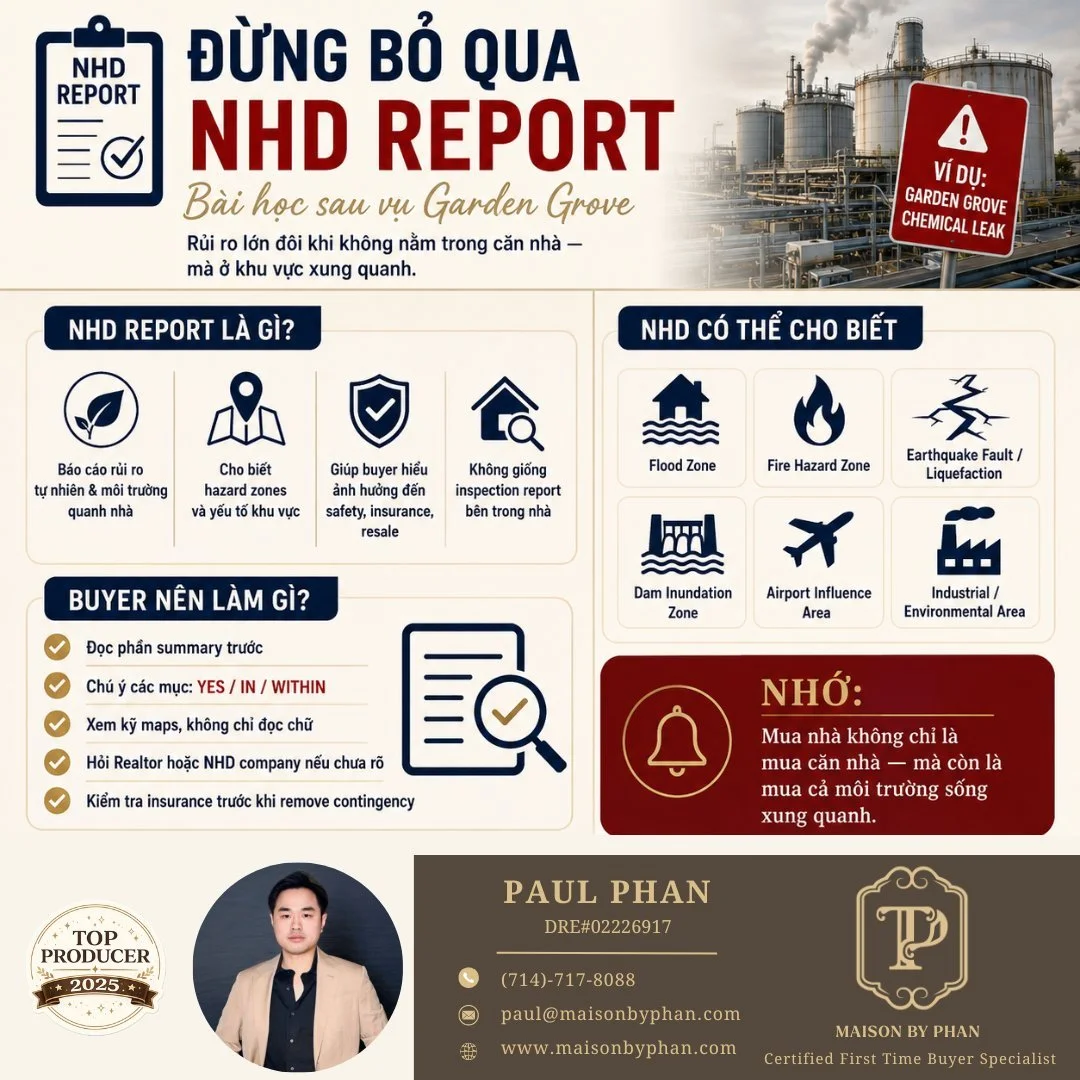
What Is an NHD Report?
An NHD Report is a disclosure report that helps buyers understand certain natural hazard zones and environmental factors that may affect a property and the surrounding area.
It is not just about the house itself. It is about the environment around the home and the location-based risks that could impact:
safety
insurance
long-term ownership costs
future resale value
Many buyers glance through the report quickly because it can feel dry, technical, and full of maps and legal language. But that is exactly why it deserves more attention.
Sometimes the biggest risks are not visible during a 15-minute home tour. A house can be beautiful, newly remodeled, and priced attractively, but the more important question may be:
What is around the home?
What an NHD Report Can Reveal
Depending on the property and location, an NHD Report may identify whether a home is located in or near areas such as:
flood zones
fire hazard zones
earthquake fault zones
liquefaction zones
dam inundation zones
airport influence areas
industrial or environmentally impacted areas
These are not always the kinds of issues a buyer can see just by walking through the home. They are often only discovered by carefully reviewing the disclosure package and NHD Report.
NHD Report vs. Inspection Report
Many buyers confuse the NHD Report with the home inspection report, but they serve very different purposes.
Inspection Report
An inspection report focuses on the condition inside the property, including items such as:
roof
plumbing
electrical systems
foundation
leaks
appliances
NHD Report
An NHD Report focuses on the surrounding area and location-related risks, including:
hazard zones
environmental concerns
flood, fire, and earthquake risks
nearby influences that may affect safety or insurability
In simple terms:
Buying a home is not just buying four walls and a roof. You are also buying the environment around that property.
Why This Matters for Buyers
The Garden Grove incident is a reminder that not every major risk is obvious when you first look at a home.
A buyer may ask:
How many bedrooms does it have?
What will the monthly payment be?
Can the seller lower the price?
Those are all important questions. But smart buyers should also be asking:
What risks exist in this area?
What does the NHD Report say?
Will insurance be affected?
Is there anything nearby that could impact daily life or future value?
Is this an area that makes sense for my family long term?
These questions can help buyers make better, more informed decisions.
What Buyers Should Do When They Receive the NHD Report
When reviewing the disclosure package and NHD Report, buyers should take the time to do more than just sign the paperwork.
Here are a few practical steps:
1. Read the summary section first
The summary can help buyers understand the overall findings before going through the full report.
2. Pay close attention to “YES,” “IN,” or “WITHIN”
These words often indicate that the property falls inside a hazard area or within a designated distance of something important.
3. Review the maps carefully
Do not rely only on the written descriptions. The maps can show whether the home is near:
freeways
airports
industrial zones
warehouses
flood channels
special land-use areas
4. Ask questions if anything is unclear
Buyers should ask their Realtor or the NHD company for clarification if they do not fully understand a section of the report.
5. Research insurance before removing contingencies
Hazard zones and surrounding conditions can affect insurance availability and cost. It is better to understand that early in the transaction.
A Practical Lesson for Home Buyers
The Garden Grove chemical leak does not mean that every home near an industrial area should automatically be avoided. That is not the takeaway.
The real lesson is this:
Some of the biggest risks in real estate are not the ones you see when you walk into a home. They are the ones you had the chance to read about but chose to skip.
That is why buyers should take disclosure documents seriously, especially the NHD Report. Reading carefully, asking better questions, and understanding the surrounding area can help protect both your family and your investment.
Final Thoughts
Before signing a purchase contract, buyers should not only focus on the home itself. They should also make sure they understand the location, the surrounding environment, and any risks that may come with it.
The right home is not just about appearance or price. It is also about whether the property and surrounding area truly fit your long-term goals, comfort level, and lifestyle.
If you are planning to buy a home and want help reviewing disclosures, understanding the NHD Report, or evaluating which areas best fit your needs, Paul Phan is here to guide you through the process with care and clarity.
Contact
Phat Phan (Paul Phan)
Maison by Phan | Frontier Realty
DRE#: 02226917
Call/Text: 714-717-8088
Email: Paul@maisonbyphan.com
