
Condo vs Townhouse vs Mobile Home: What Homebuyers Need to Know
One of the most common points of confusion I see among homebuyers is this: many people tour a property without fully understanding what type of asset they are actually buying.
From the outside, a condo, townhouse, and mobile home can sometimes look surprisingly similar. A property may have its own entrance, parking, outdoor space, or even resemble a traditional home. But in real estate, the long-term value of a property is not determined only by how it looks. It is determined by what you legally own.
And one of the biggest factors behind long-term value is whether or not you own the land.
That is why it is so important for buyers to understand the difference before making an offer.
Why Property Type Matters More Than Many Buyers Realize
A home purchase is not just about layout, finishes, or curb appeal. It is also about ownership structure, financing options, resale potential, appreciation, and monthly carrying costs.
Two properties may appear similar in person, but the legal ownership behind them can create major differences in how they perform over time.
That is especially true when comparing condos, townhouses, and mobile homes.
What a Condo Really Means
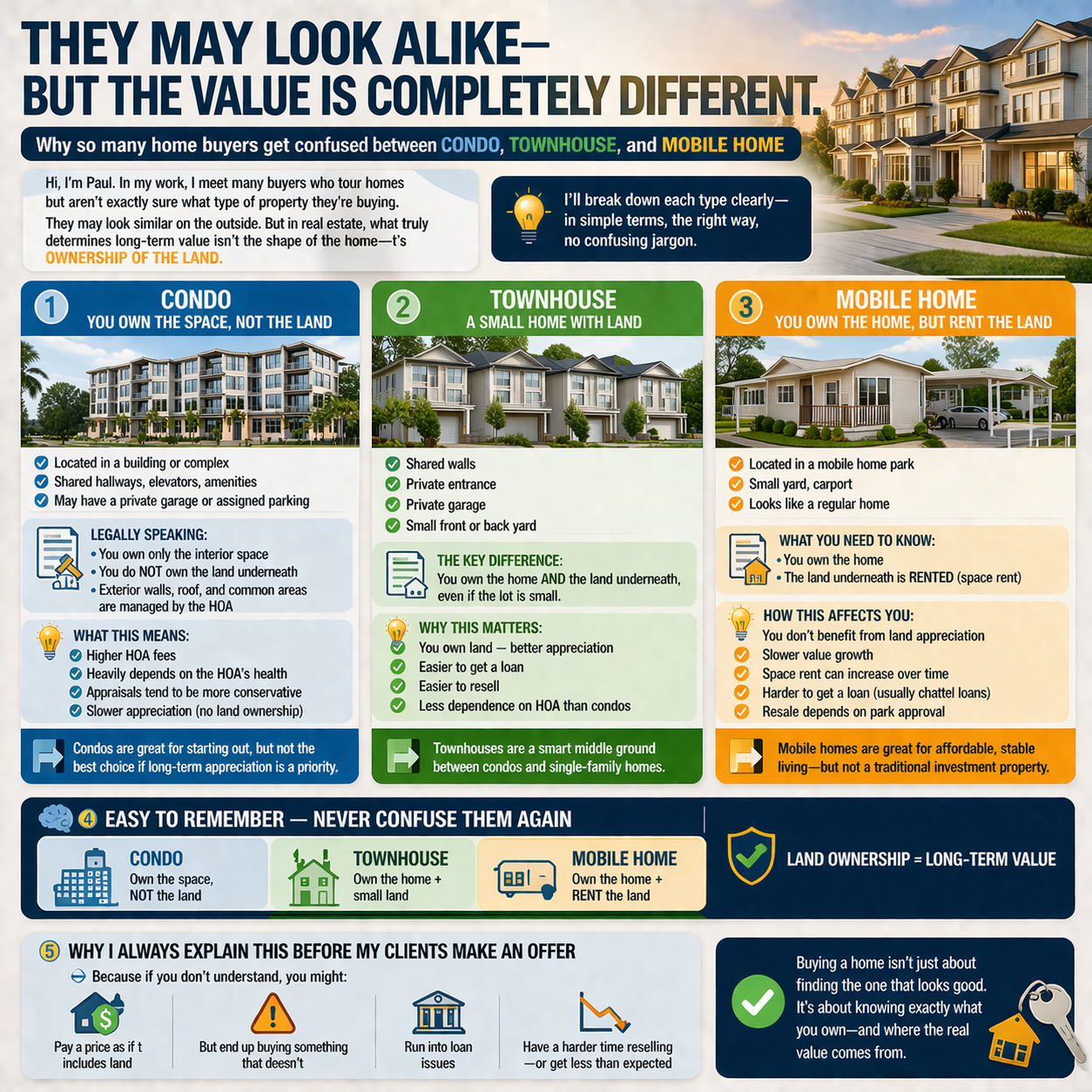
A condo can be a great entry point for many buyers, especially those looking for affordability, convenience, and a lower-maintenance lifestyle. Condos are often located in buildings or planned communities with shared hallways, elevators, common amenities, and assigned parking or garages.
From a visual standpoint, some condos can even resemble townhouses. But legally, the ownership is very different.
When you buy a condo, you are typically buying the interior space of the unit, not the land underneath it. The exterior walls, roof, shared areas, and common components are usually controlled and maintained by the homeowners association.
This ownership structure affects more than just maintenance. It can also influence monthly HOA dues, financing, appraisal, and appreciation.
Because the buyer does not own the land beneath the unit, condos often appreciate more slowly than property types that include land ownership. Financing can also be more dependent on the financial health and approval status of the HOA, which makes condo purchases more complex in some cases.
A condo can still be a strong option for the right buyer, especially as a first home. But it may not always be the best fit for someone whose top priority is long-term appreciation.
What Makes a Townhouse Different
A townhouse is often seen as the middle ground between a condo and a single-family home.
Townhouses typically have shared walls, private entrances, individual garages, and small front or back outdoor areas. To many buyers, they feel more like a traditional house than a condo does.
The biggest difference is ownership.
In many townhouse setups, the buyer owns both the home and the land underneath it, even if the land portion is relatively small. That ownership interest in the land is one of the key reasons townhouses often perform better than condos in terms of long-term value.
Owning land can make the property more appealing for financing, resale, and appreciation. In many cases, townhouses are easier to finance than condos and may be more attractive to future buyers as well. HOA involvement may still exist, but buyers are often less dependent on HOA conditions than they would be with a condo.
For many people, a townhouse is a very practical step between condo living and owning a detached single-family home.
Why Mobile Homes Are Often Misunderstood
Mobile homes are probably the most misunderstood of the three.
From the outside, a mobile home may look like a regular small house. It may have a yard, a carport, and a stable residential setting. But the legal and financial structure is very different from traditional real estate.
In many cases, when someone buys a mobile home in a mobile home park, they are buying the structure itself, but not the land underneath it. Instead, the land is leased through a monthly space rent arrangement.
That distinction changes everything.
Because the buyer does not own the land, they typically do not benefit from land appreciation the way they would with a townhouse or single-family home. The home may appreciate more slowly, financing can be more limited, and resale may depend not only on the market but also on park rules and buyer approval by park management.
Many mobile homes are financed differently from standard homes as well, which can affect both loan availability and long-term cost.
That does not mean a mobile home is a bad option. For some buyers, it can be a practical solution for stable housing at a lower price point. But it is important to understand that it is not usually viewed as a traditional real estate investment in the same way a property with land ownership would be.
The Simple Way to Remember the Difference
The easiest way to remember the distinction is this:
A condo usually means you own the interior space, but not the land.
A townhouse usually means you own the home and a small portion of land.
A mobile home often means you own the structure, but lease the land.
That difference in land ownership is one of the biggest reasons these property types behave differently in terms of value, financing, and future resale.
Why Buyers Need to Understand This Before Making an Offer
I always explain this clearly before a client writes an offer because misunderstanding property type can lead to costly assumptions.
A buyer may think they are paying a price comparable to a home with land, when in reality they are purchasing a property without that same ownership value. That can affect how they negotiate, how they finance the purchase, and what they should realistically expect in terms of appreciation and resale.
It can also affect how quickly the home sells in the future and how attractive it may be to the next buyer.
Buying real estate is not just about finding a home that looks nice. It is about understanding exactly what you are buying and where the real value comes from.
Final Thoughts
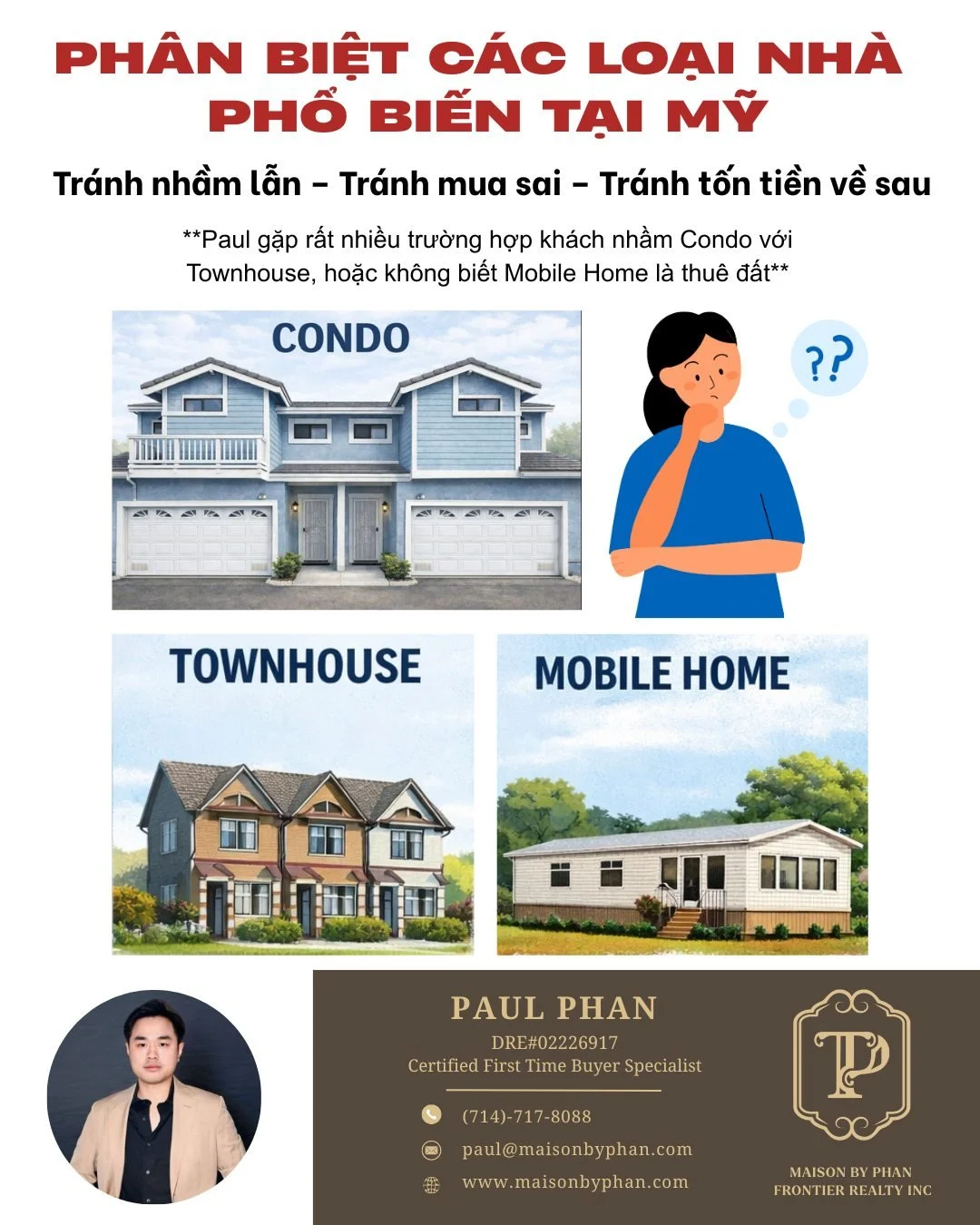
Condo, townhouse, and mobile home are not just labels. They represent very different forms of ownership, and those differences matter.
A condo may be a smart starting point for convenience and affordability. A townhouse may offer a stronger path toward appreciation because it often includes land ownership. A mobile home may provide an accessible housing option, but buyers need to understand the limitations that come with leasing the land underneath.
The outside appearance of a property can be misleading. What matters most is the ownership structure, the financing, and the long-term value behind it.
Before making an offer, buyers should always make sure they understand not just what the home looks like, but what they are truly buying.
Because in real estate, value is not only about the house itself. It is also about the land, the legal structure, and the future potential that comes with it.
Which property type do you think fits your goals best right now: condo, townhouse, or mobile home?
Contact
Phat Phan (Paul Phan)
Maison by Phan | Frontier Realty
DRE#: 02226917
Call/Text: 714-717-8088
Email: Paul@maisonbyphan.com
